Sexual technology
A theory fiction about sex and mitochondria

Originally delivered as a lecture performance in Berlin - 7 October 2016
In his house at [Rylon] Cthulhu waits dreaming…
“The most merciful thing in the world, I think, is the inability of the human mind to correlate all its contents. We live on a placid island of ignorance in the midst of black seas of infinity, and it was not meant that we should voyage far. The sciences, each straining in its own direction, have hitherto harmed us little; but some day the piecing together of dissociated knowledge will open up such terrifying vistas of reality, and of our frightful position therein, that we shall either go mad from the revelation or flee from the deadly light into the peace and safety of a new dark age.”
(139 Lovecraft)
Sex, as we humans have often come to experience it is, in fact, really just a certain “type” of symbiogenetic interaction on a large organism level; a sort of cultural nth-degree of sensuous masquerading playing out its drama on the anatomical frame of nothing more than a habituated fertilization method for mammalian chromosome mutation. An amalgam of years of conditioning, metabolism and the biochemical interactivity of stewing fluid and bacterial exchange streamlined through thousands of millennia of contingent and monstrous co-evolutionary transformations.
This process may be “sensual” in the broadest sense of the word in that it is registered or initiated through various nervous stimulations coupled with the organism’s other sensorial capacities; smell, taste, vision, and of course touch. But despite how these coarse reproductive capacities are too often mapped as the sine qua non of sensual epiphany, the long duree of material processes, once de-laminated from subjective, experiential feelings, points to a rather grotesque reproductive form of mammalian life that only gains its status at the top of sensual experiences through a host of cultural values that prioritize reproduction.
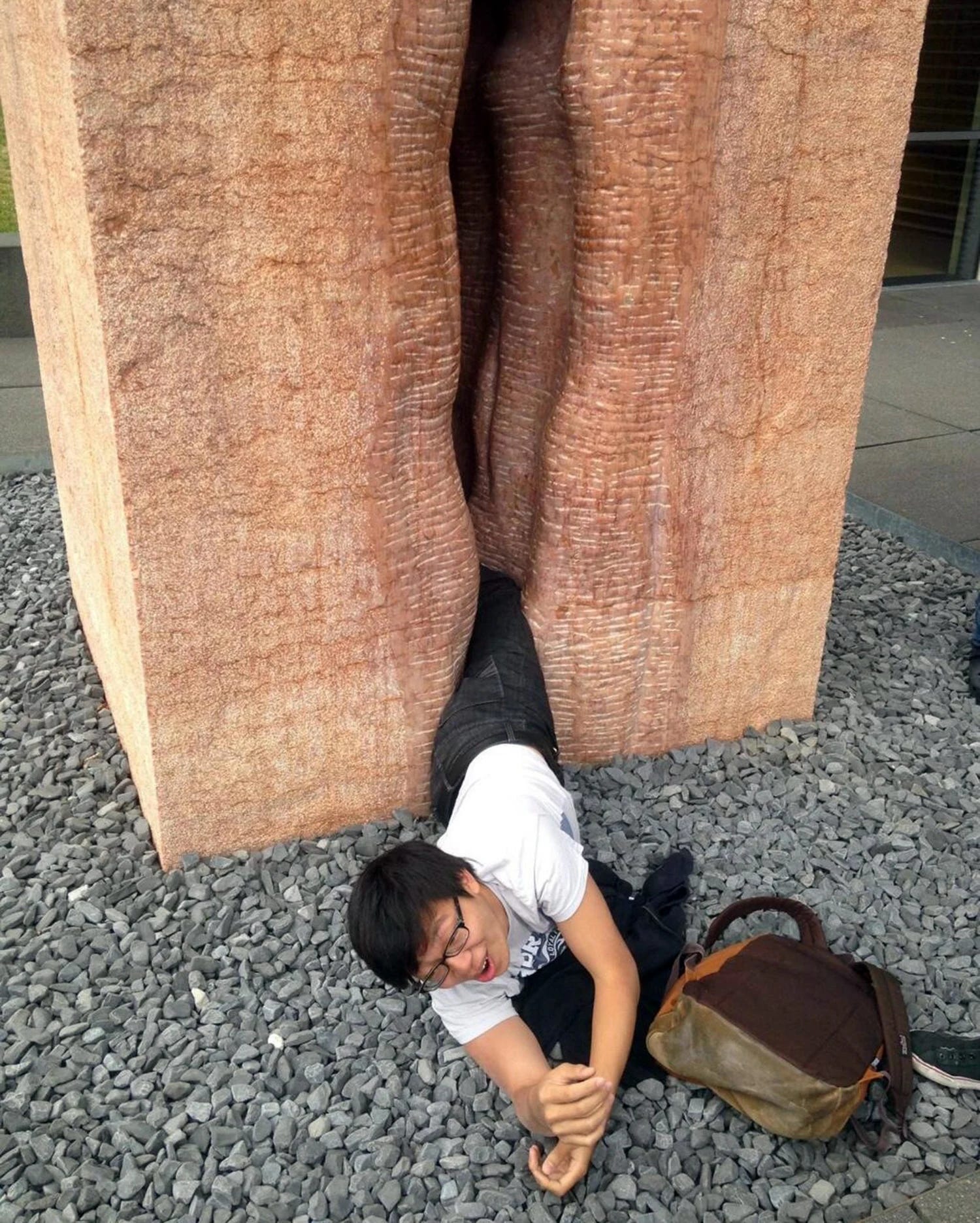
Frankly, as we look even deeper into the matter, even the reproductive elements of human sexual intercourse look somewhat banal in front of the many millions of metabolic and generative transformations happening on and alongside our bodies. Among the multitude of bacteria, of chemicals, of bends and of cuts, transformations abound on so many levels of exchange that it’s dizzying. This happens during “generic” reproductive sexual intercourse but it also happens in other forms of interaction as even certain types of touch trigger radical recombinant cognitive and motor responses, biochemical mixings, viral contagions, or physical lacerations.
And these forms of interaction have no boundary – they cross what seem like such firm delineations with little regard for what is intentional or not. Genders, species, the line between organic and inorganic substances, the lines between virtual and physical psychotropic phenomena, and even the course of phylogenetic evolution all begin to break and recombine under the stress of parametric synthesis and metabolism.
“I like to eat, he says without being greedy: I’m sensual and not piggish. Too many other tastes pulled me away from that one. I never took care of my mouth except when my heart was unoccupied; and that happened so infrequently in my life that I hardly ever had the time to think about the choice dishes.” (104 Serres)
As suggested by Lynn Margulis, “‘We,’ a kind of baroque edifice, are rebuilt every two decades or so by fused and mutating symbiotic bacteria. Our bodies are built from protoctist sex cells that clone themselves by mitosis [...] Our symbiogenetic composite core is far older than the recent innovation we call the individual human. Our strong sense of difference from any other life form, our sense of species superiority, is a delusion of grandeur” (98 Margulis) and one that too often guides us into the paltry understanding of our “selves” or even our “sex life” which, if we take Margulis’ view is our life form and its creation itself! Skeletal mineral deposits infested with cells and bacteria, teeming with parasites; a walking metabolism...
And the para metabolic action doesn’t stop there even. Evolutionary biologists Lemuel Roscoe Cleveland has suggested that meiotic sex – the two organism style sex had by mammals – was itself spawned from a series of cannibalistic indigestions. In those ancient pre-Cambrian years, food was scarce and resources limited. The populations of protoctists felt unprecedented environmental pressure; pressure that would force many to turn on their neighbors, devouring them in hope of metabolizing yet a few more calories into their organism, turning this orgy of austerity into a fight of all against all. A space where “some cannibals ate and digested every last cell appendage of their victim brothers [while] another might suffer indigestion and spare the nucleus and chromosomes of its intended meal… recognizing a final cannibalistic truce,” (99 Margulis) that would usher in the beginnings of the process of fertilization ushered by the interaction of all the spare parts. “Eating-mating itself created irreversible gorging” (101 Margulis), mixing and synthesizing chromosomes and organelles into unforeseen speciations.
Into the depths of this stew of cannibalism, waste, and metabolism, our vision becomes ever closer to a space of non-differentiation; to a space where this line of “sex” – this very concept even – begins to dissolve into a sticky gunk of indecipherable organelles and organisms inside out and folded upon each other, collapsing their individualism, their organism, into to a putrefied nothing.
Reproduction mixes with metabolism mixes with parasitism mixes with transformation and all the unstable chains cascading along their lines of synthesis. And each time making this concept – sex – fall from its cultural heights into being simply one of millions in a host of generative and synthetic bio-chemical exchanges.
“Without knowing what futurism is like, Johansen achieved something very close to it when he spoke of the city; for instead of describing any definitive structure or building, he dwells only on broad impressions of vast angles and stone surfaces – surfaces too great to belong to any thing right or proper for this earth, and impious with horrible images and hieroglyphs [...] He had said that the geometry of the dream-place he saw was abnormal, non-Euclidean.” (166 Lovecraft)
But what is this geometry we speak of? Sure, it is a fact that understanding sex in this way is beyond our day to day comprehension in both time and scale. Nevertheless, the mixing persists but in such a way that this sacral image of sex as both sensual apex and king of interactive synthesis seems dismally marginal.
Transformation, mutation, synthesis… the many lines of exchange and vectors of distortion mark every interaction on this Earth. The subtle geometry of kinds, of types, of mixtures and symbiotes draw lines across our existence tumbling toward bifurcating paths of evolutionary indefinition. Yet almost tirelessly, these rampart human cultures find it necessary to regulate these forms, to police the geometries into tidy confines of phylum and species, of gender and race, or even of organelle and orifice.
“It was nightmare itself, and to see it was to die. But it made men dream, and so they knew enough to keep away. The present voodoo orgy was, indeed, on the merest fringe of this abhorred area, but that location was bad enough; hence perhaps the very place of the worship had terrified the squatters more than the shocking sounds and incidents.” (151 Lovecreaft)
And so out of fear or – at the very best – simplicity, the humans take it upon themselves to graft their geometric certainties on the planet and themselves. Skeuomorphs of a past that was never even there perpetually designing and configuring ourselves and our world around us in some pathetic attempt at formalizing the most limited paths of evolutionary potential.
But have we not learned from the austerity of the past ages? Have we not seen what horrors emerged from these evolutionary pressures from our protocist ancestors? Will we too find ourselves in the same cannibalistic frenzy…?
“We humans may heed the lesson. We always create waste; life must excrete as it proliferates. No one is surprised when useful artifacts are fashioned from discarded automobile and plastic party items. The metamorphosis of pollution has precedents. Prudently, unconsciously, we follow the lead of our remote ancestors.” (95 Margulis)
Only this time, our waste will not be the forgotten and undigested organelles and chromosomes dismembered by such simple bacteria. Our waste is orders of magnitude more weird. Our trash, our objects, our creations rarely even seem like they are part of us, but to miss this point would be foolish. Perhaps it is even just our skeuomorphic geometries getting in the way again! So busy seeing invention and creativity and the pageantry of human affairs that we forget about all those transformations already at play.
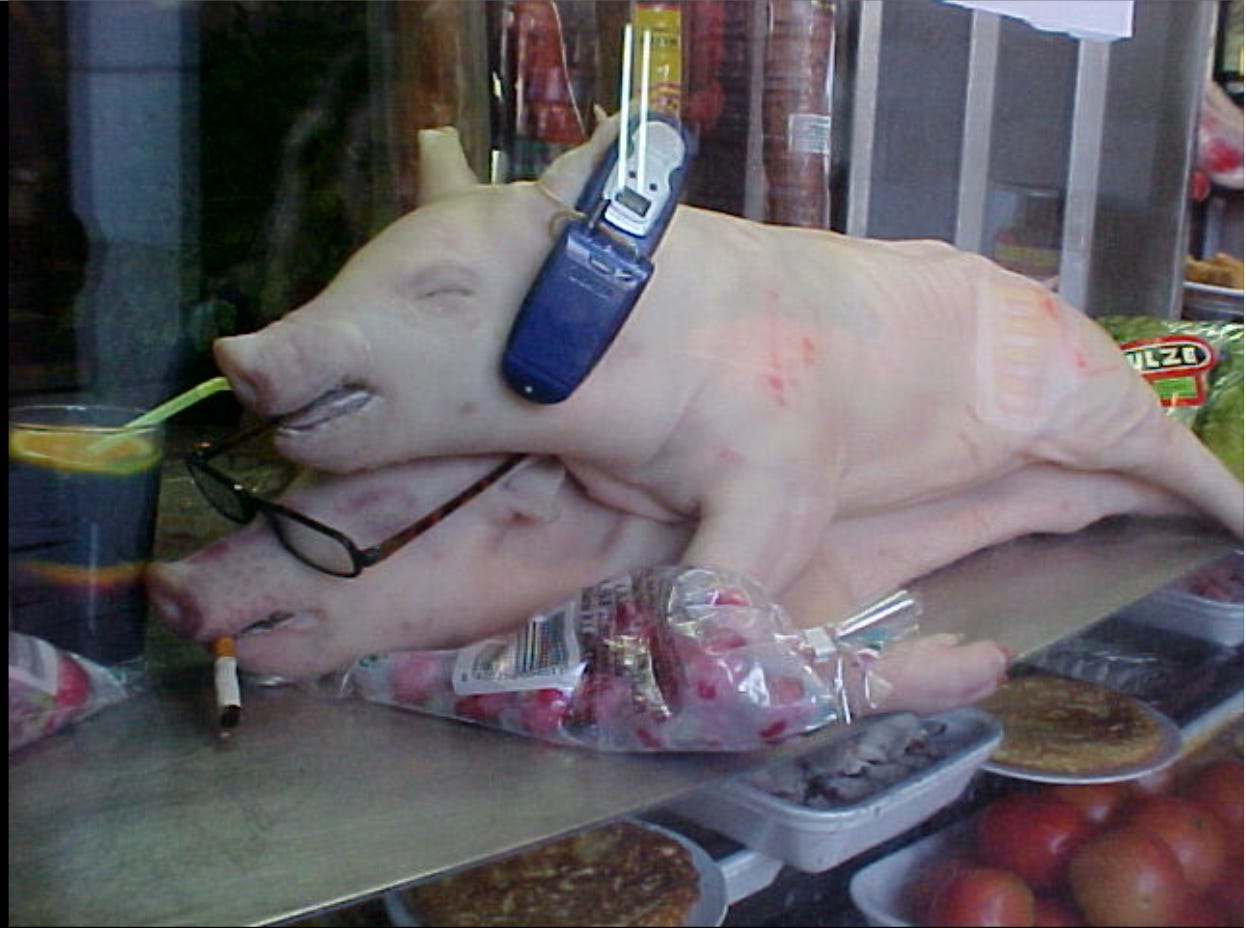
After all, those cognitive and material secretions; that foul of our technospheric mania and the attendant speciations engendered by it have, for quite a while now, acted as not only our waste and output but also as new companion phyla of silicon and lithium based lifeforms. Though often more rigid and slightly less mitochondrial than their organic precursors, these objects and technological artifacts intercede into not only the biochemical makeup of the Earth’s many systems, they also transform the humans as much as the humans transform them. Their ergonomic encroachment, their psychotropic triggers, their metabolic accelerations, or even their incursions into sexual reproduction itself all push the limits of these things called humans beyond their parameters; bending and mutating their transformative capacities and accelerating the absolute destruction of all those geometries so neatly maintained.
Are we ready for such a revolution? One that is more Cambrian than French… where the vectors of transformation are not directed at prohibition but rather steered toward an orgy of terrifying proliferation? What could result in lifting our simplistic designs in pursuit of an inhuman set of transformations – a trajectory that no longer posited humans and their sensual promises at the top of some developmental hierarchy but instead succumbs to the “terrifying vista” of reality where all species are equally evolved just along radically different paths across scales and forms unimaginable? What would it mean to evacuate these processes and even ourselves of all this “meaning” and “value”?
Taking a queue from Alchemy, this sort of putrefaction of meaning is quite similar to the process of Nigredo. In this process, substances are stripped of all their qualities until brought to their essential components. The Alchemists would use any process available to concoct the various mixtures; to dissolve every structure, to synthesize any linkage and integrate everything into everything else unto the point where no one thing could be differentiated from any other. The parts can no longer have meaning on their own. Everything would become indistinguishable. Maybe it’s even helpful to think of it as an absolute composite; a mass that is so mixed up with all the parts, that you can only make out the fact that it is matter having no discernable contents to speak of.
Alchemists thought that by doing this, they would be able to get at the essential ingredients of matter which they could then turn into the Philosopher’s Stone – the source of eternal life, absolute enlightenment, and, best of all, the ability to turn any base metal into gold. In essence, they strip away the unnecessary baggage of matter – all that meaning placed upon it, all those geometric forms and sentimental decorations that give the surficial illusion of consequential separation. And from the gunk – gunk perhaps not that unsimilar to the pre-cambrian stew life on this planet emerged from – a whole host of new forms and organisms could proliferate; caustically emerging in long changes of transformation. Composition from decomposition. Fusion from Fission. From Nothing to Something.
“What one could call a will to inauthenticity, as human subjectivity becomes less dependant on a sacrosanct body and the attendant tropes of nature and the organic. There is no fear here of erasure, but a faith in hybridity to produce novelty.” (141 Chude-Sokei)
What then will become not only of the Earth and its hydra of interwoven evolutionary pathways but also of that ape called human? What will its place be when no longer at the top? Would we then be able to shake the shackles of those geometrical police of the “authentic” and “natural?” Could we then actualize our active desires for transformations beyond gender, beyond species, or even beyond reproduction? Could we navigate new lines of interaction and symbiosis with not only our technological organelles but also those other creatures in phyla much more similar to ours?
But first we must call out, like the terrifying cults in H.P. Lovecraft’s story to that subterranean monstrosity known as Chtulhu to confront the fear of things beyond our knowing, those things that are slightly beyond our rational reach, those horrific and unseemly things shrouded in darkness, occulted from our human understanding; lurking in depths beyond the pale of our cognitive or cultural schema.
In his house [...] Cthulhu waits dreaming...
References:
Chude-Sokei, Louis. The Sound of Culture. Diaspora and Black Technopoetics. Wesleyan U Press, 2016.
Lovecraft, H. P.. “The Call of Cthulhu.” In The Call of Cthulhu and Other Weird Stories. Penguin, 1999.
Margulis, Lynn. Symbiotic Planet. A New Look at Evolution. Basic Books, 1998.
Serres, Michel. The Parasite. Translated by Lawrence R. Schehr. U of Minnesota Press, 2007 (1982).