Ubiquitous Computing
Social Reproduction in the Time of AI

Recently, I’ve started re-reading texts from the early days of Human Computer Interaction (HCI) in the 1990s and early 2000s as I search for perspectives unsullied by the current culture war. It’s been a palette cleanser that is markedly helpful as I start designing some workshops I’m developing this summer for a new experimental school.
What makes this generation of thinkers particularly interesting to me is their heavy reliance on anthropological and ethnographic methods in the design of technology. Lucy Suchman, working at Xerox PARC in the 1970s and 80s, watched designers grapple with the weirder elements of human-computer interaction and produced the foundational text Plans and Situated Actions. Paul Dourish built directly on her work in the 90s and 00s to argue that the central problem of HCI was not how to specify a user’s needs in advance, but how to design for the situated, improvisational ways people actually go about meaningful action. Or even Bonnie Nardi’s reanimation of Russian “action-theory” which sees social scaffolds as integral for how and why we behave and derive meaning from different systems.
Rarely do any of these thinkers make clear distinctions between human and machine. Instead, they study and schematize the type of human activity that might be aided or abetted by the use of different technological systems understanding that the pertinent unit of analysis is not a user and an interface but an entire situation where people and technologies are tied together in a recurring practice of metabolizing artifacts and knowledge.
Paul Dourish’s 2004 essay “What We Talk About When We Talk About Context“ for instance, identifies four assumptions baked into the way most engineers and product people think about contextual factors when building technological interfaces or UX: that context is information that can be encoded, that it is delineable such that we can decide in advance what can be benchmarked, that it is stable and doesn’t vary from one instance of activity to another, and most importantly that it is separable from activity. Against this, he suggests that contextuality is in fact a relational property rather than a fact about the world; that the scope of contextual features that need to be defined dynamically. That context is occasioned insofar as it is particular to each instance of action, and most importantly, that “context isn’t just ‘there,’ but is actively produced, maintained and enacted in the course of the activity at hand” (p. 22).
This truly matters for how we understand the social dynamics of context, how they are dynamic, and why this matters for the way technologies or computation are built into the living structures of our lives. If context is something people are actively achieving together, then a technology that lands in their lives is not entering a stable container called “the user’s environment,” or a “human” or “non-technological” structure. Rather, it is entering a practice that people are continually making and remaking with one another much in the way philosopher Sylvia Wynter also described a more enactive form of humanism that continually communes with a wider circle of species and things.
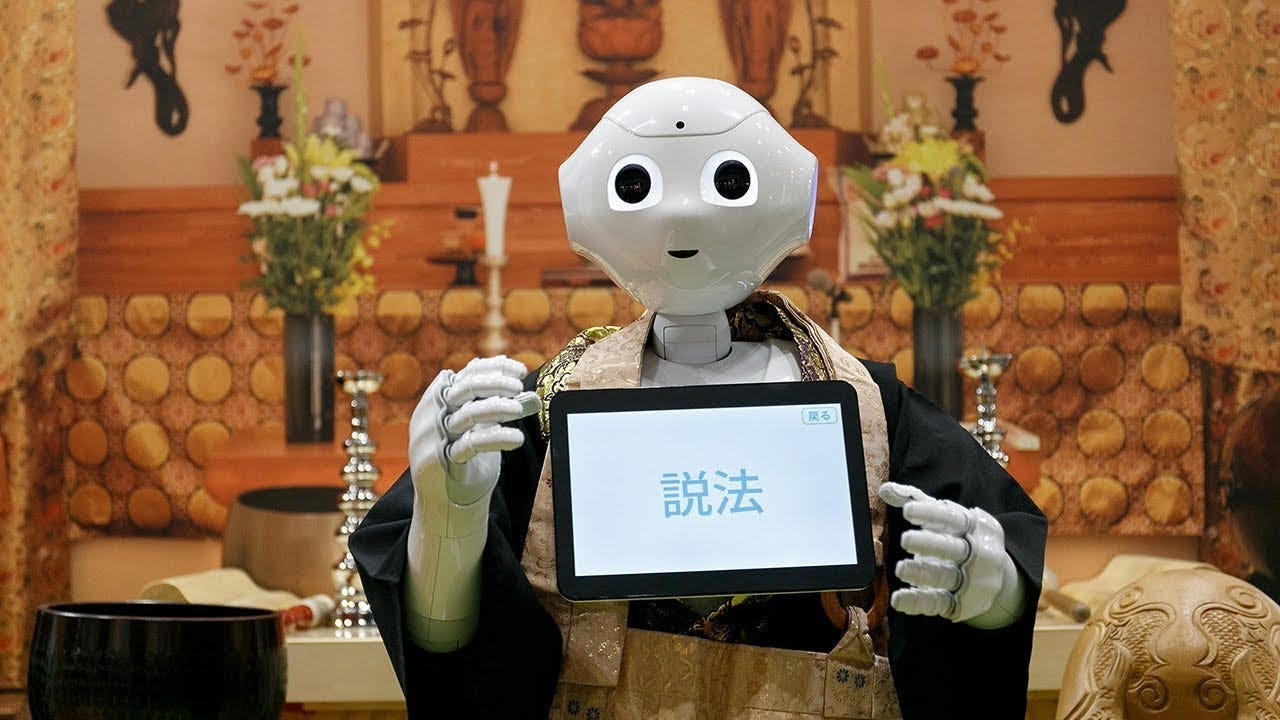
This is why I’ve come to interpretPope Leo XIV’s recent encyclical, Magnifica Humanitas, which takes up a related question about how the dignity of human life can be sustained in an era of disruptive technology as an attempt to rearticulate what exactly we are building technologies for. As much as it has been volleyed around as some sort of anti-tech culture war missive, I found the text somewhat level headed and pointing at something that isn’t really about technology at all but about meaning and social reproduction in much broader terms. It takes the assumption that technology is shaping our world and if that is to be the case then we ought to articulate what shape we want it to take. Sure, his own shaping falls squarely on Catholic doctrine, but I think the overall argument stands that we are at a fork in the road that requires us, as collectives, as cultures, to articulate how these technologies land within a larger process of making our social doings feel meaningful.
Creating a new form of social systems that explicitly finds ways for social reproduction with new technologies, rather than against them, is the critical missing link here. Philosophically, because the alternative — drawing a hard line between the human and the technical — collapses under the weight of its own ahistoricism. Pragmatically, because the technologies are already here and already acting as substrate for everyday life, and refusing to design for the social reproduction they enable means letting whatever SaaS business model or leveraged equity decision determine the shape.
What is needed is a whole new framework for human-computer interaction, or interface, in an era of actual ubiquitous computing.
When Paul Dourish began talking about “ubiquitous computing“ it was in this speculative phase, used loosely, to mean what would become “Internet of Things” IoT. But from the vantage of 20 years after it was written, I’m seeing how his speculations about a “digital future in which computation is embedded into the fabric of the world around us” is more fit-to-purpose for our own era than anything resembling IoT or Smart City experiments we see today. Toasters with Wi-Fi, in turns out, were not originally the intended scope for how we had hoped this interactive paradigm of being genuinely enmeshed in an environment of computing that is everywhere, mediating relationships, structuring attention, holding open spaces where social life is reproduced.
In this expanded view, it’s in fact easy to see our current day-to-day as a ubiquitous set of situations and social relationships that are all mediated, coordinated, and communicated with the aid of computation. So much so that a lot of information, materials, actions, and more are more useful when they are machine readable or only have real value as AI infrastructure (the infamous Holly Herndon and Mat Dryhurst rejoinder that everything online is now just training data). It has become integral to our entire human practice, inseparable from our social beings as much as tools have been throughout human history. The reason we are so reticent about it, though, is that this intermediation has often steered us toward the most facile forms of commodification and capital extraction that have little to do with the social utility we hope it can help us maintain.
If AI is going to take up residence in those contexts — in the kitchen, in the school, in the workplace, in a board meeting — then the design question is not how to maximize the AI’s task performance but rather what role this new entrant plays in the environment we are building for each other, and whether the practice survives its arrival in a form we recognize. Just like the human isn’t some codified ideal which we need to placate with antiquaited ideas but a practice, evolutionary and ever expansive of new environments, situations, technologies, species, and more. It needs to be woven into the fabric of this social form, not a wedge that disassembles all of it.
I'd be curious to hear your thoughts on what an alternative form of technological production looks like!